How often should washer hoses be replaced?
Rubber hoses are commonly replaced every five years or so. Braided stainless hoses last longer but still need checks.
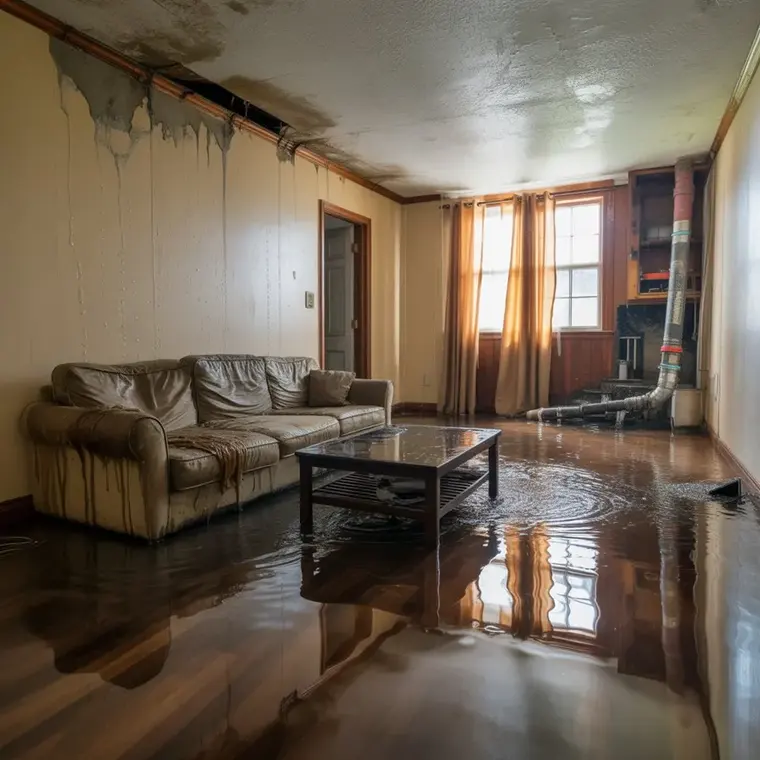
A washer supply hose can release water at full house pressure, and in a walk-up it rarely stays in one apartment. The restoration team extracts it, dries under cabinets and floors, and checks the ceiling below.
(888) 527-9860Washer or dishwasher flooding? Call now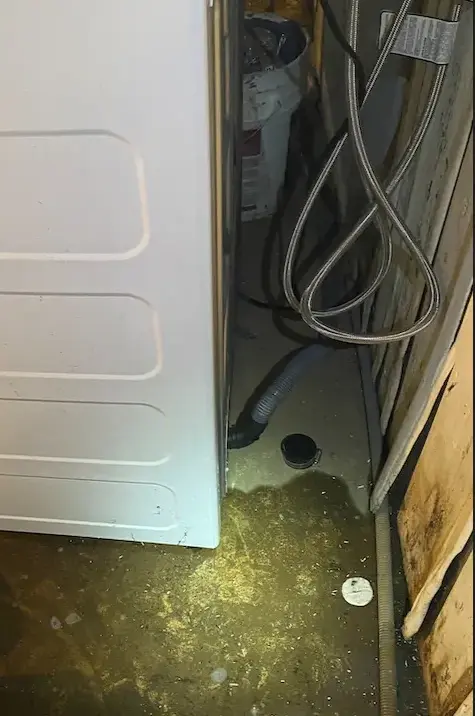
Close the valve behind the washer or under the sink; if it will not turn, close the main.
Only if the outlet and your hands are dry. Otherwise turn off the circuit at the panel.
Move rugs and items from under the sink; do not drag heavy appliances across wet flooring.
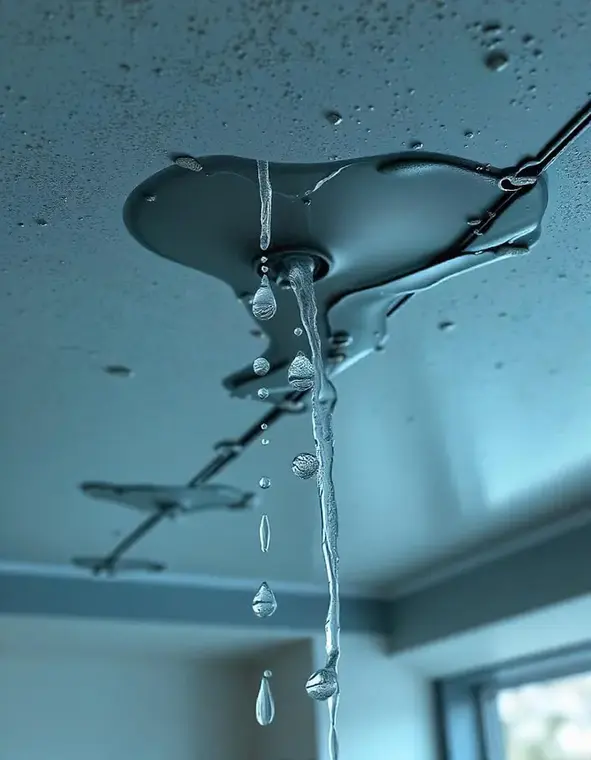
In a walk-up or two-family house, check the ceiling underneath right away.
In Woodside, NY, appliance leak cleanup typically runs $500 to $2,500 for a kitchen or laundry area, and $2,500 to $7,000 when the water reached the unit or room below. How long it leaked, whether it was supply or drain water and the flooring set the number.
For a planning number on your own loss, try the water damage cost calculator. The final figure comes from the on-site walkthrough and the moisture map.
Pinless meters check under cabinets, behind the appliance and the subfloor; the ceiling below gets checked too.
Water comes up off the floor and out of carpet or pad; toe kicks come off where water ran under cabinets.
Air movers push air under cabinets and into wall bases while LGR dehumidifiers pull the moisture out.
Readings are logged daily until the floor, cabinets and ceiling below are dry.
Woodside kitchens and laundry corners are tight, and many washers sit in a cellar corner, a closet or a kitchen nook one floor above someone else's living room. When a supply hose splits or a drain hose pops out, water spreads under cabinets and appliances before anyone sees it.
Braided stainless hoses and an automatic shut-off valve cut the risk; EPA WaterSense covers efficient appliances and fixtures.
The water that does the damage is the water you cannot see. The tech who does the walkthrough checks the subfloor, the base cabinets and the wall bottoms with pinless meters, and the drying team removes toe kicks to push air underneath. Supply-line water is Category 1; washer discharge is Category 2 and gets cleaned before drying.
In a walk-up or a two-family house, an appliance leak is often two losses: the kitchen where it started and the ceiling below. Both get mapped and dried together, and both get documented, since two owners or two insurers may be involved. The apartment and co-op unit leak page covers that side.
Building owners can find rules on building systems through NYC Housing Preservation and Development.
The Woodside restoration crew works every section of 11377, from Winfield to Boulevard Gardens, plus Sunnyside, Jackson Heights, Elmhurst, Maspeth, Astoria, East Elmhurst.
See every Woodside section coveredRubber hoses are commonly replaced every five years or so. Braided stainless hoses last longer but still need checks.
Supply water is Category 1. Water from the drum or drain hose is Category 2, so it is cleaned before drying.
Usually not. Removing toe kicks and blowing air underneath dries most base cabinets; swollen particleboard may need replacing.
A contained kitchen or laundry loss often dries in three to five days.
The ceiling below gets checked and dried at the same time, and both units are documented.
Sudden leaks are commonly covered while slow ones may not be. Coverage depends on your policy, so it is worth checking with your own insurer.
Appliance water runs under cabinets and into the subfloor where it cannot be seen. Moisture mapping finds it.