Where is the main shut-off in a Woodside house?
Usually in the cellar near the front wall where the water service enters from the street. In apartment buildings, the super or building staff control the risers.
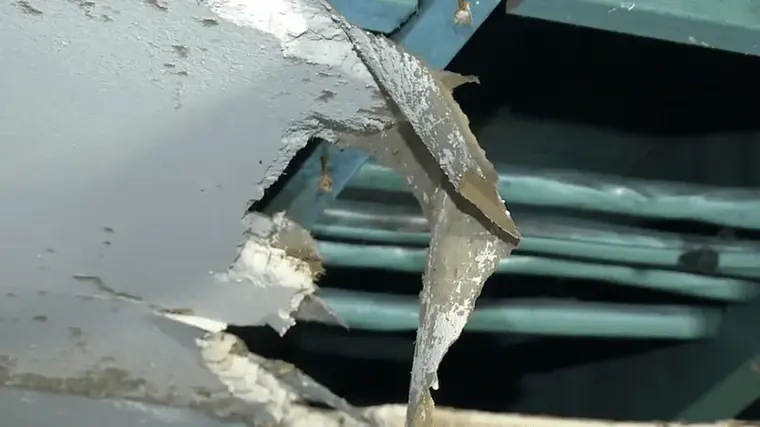
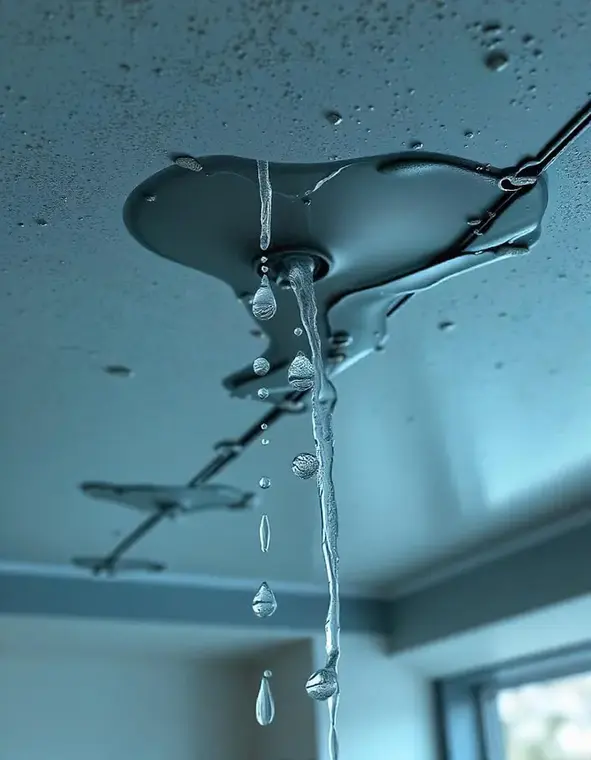
A burst supply pipe can move hundreds of gallons before anyone finds the shut-off. The extraction crew pulls the water out, opens only what has to be opened and dries the wall and ceiling cavities to a verified reading.
(888) 527-9860Pipe burst? Get the water out now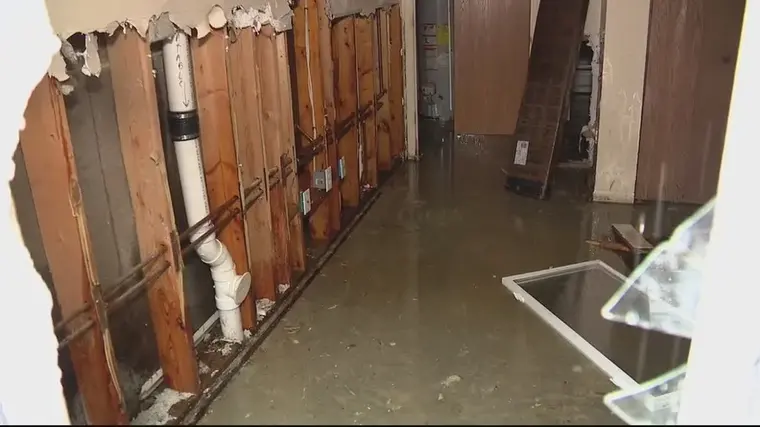
In most Woodside houses the main valve sits in the cellar on the street-facing wall. In apartments, call the super or building staff.
Once the main is off, open a low faucet to take pressure off the break.
If water ran into ceiling fixtures or outlets, turn those circuits off at a dry panel.
Buckets under drips, then photos of the wet ceilings, walls and floors before anything is moved.
In Woodside, NY, burst pipe cleanup typically runs $1,200 to $5,000 when the water stayed in one or two rooms, and $5,000 to $12,000 when it ran through ceilings into the floor below. How long the pipe ran, the materials soaked and how many floors it reached set the number.
For a planning number on your own loss, try the water damage cost calculator. The final figure comes from the on-site walkthrough and the moisture map.
Thermal imaging and pinless meters trace how far the water ran inside walls, ceilings and under floors.
The extraction crew removes standing water, then opens small access points or a flood cut only where readings demand it.
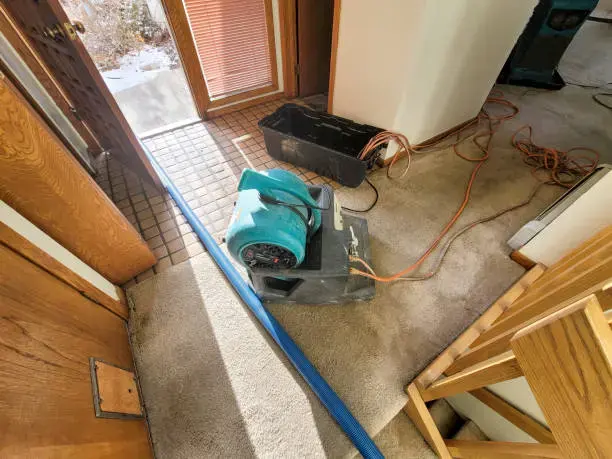
Air movers, LGR dehumidifiers and cavity-drying setups push dry air into the wall and ceiling spaces.
Daily readings continue until the structure is dry, then the file goes to the adjuster and the repair contractor.
Much of Woodside's housing went up in the 1920s and 1930s, and plenty of it still carries galvanized steel supply pipe that corrodes from the inside. A pinhole becomes a split, and a split under street pressure can soak a kitchen and the ceiling below it in minutes.
The trouble spots repeat: supply risers inside the party wall of an attached house, the pipe to an upstairs bathroom, the line to a kitchen on an exterior wall, and anything in an unheated vestibule or garage. In walk-ups, one break on a riser can reach three apartments.
Plaster on wood lath holds water differently from modern drywall. The tech who does the walkthrough maps the wet area with thermal imaging and pinless meters, then the drying team decides whether the wall can be dried in place with small access holes or needs a flood cut. Clean water from a supply pipe is Category 1 at first, which means more can be saved if drying starts early.
NYC Buildings sets the rules for the plumbing repair itself; the restoration side is extraction, drying and documentation.
Category 1 water turns into Category 2 as it sits and picks up dirt from the structure. After 24 to 48 hours, growth becomes a concern. That is why the extraction crew moves quickly and why equipment stays until the readings, not the calendar, say the job is dry.
Winter cold makes breaks more likely; Ready.gov winter weather tips cover protecting pipes before a freeze.
The Woodside restoration crew works every section of 11377, from Winfield to Boulevard Gardens, plus Sunnyside, Jackson Heights, Elmhurst, Maspeth, Astoria, East Elmhurst.
See every Woodside section coveredUsually in the cellar near the front wall where the water service enters from the street. In apartment buildings, the super or building staff control the risers.
Not always. Clean water caught early can often be dried in place with small access holes. Readings decide whether a flood cut is needed.
A contained Class 1 or 2 loss usually dries in three to five days. Plaster, hardwood and multi-floor losses take longer.
A plumber repairs the pipe. The restoration team handles extraction, drying and the documentation.
Sudden and accidental discharge is commonly covered, subject to the deductible and exclusions. Coverage depends on your policy, so it is worth checking with your own insurer.
Sometimes. If readings show the plaster or drywall is sagging or holding water, it comes down for safety; otherwise it is dried with air directed into the cavity.
Water inside a wall cavity stays hidden for days. Thermal imaging and a moisture map find it before it spreads.